Blogs
Electrician Website Design — Templates vs Custom: Which Actually Gets You More Calls?

Key Takeaways
- For most solo and small electrical contractors, a well-configured template site outperforms a poorly executed custom site at a fraction of the cost.
- Click-to-call, online quote request, and service area pages are the three features that directly generate calls.
- Google Business Profile is the #1 call driver for electricians — the website supports it, not replaces it.
- Page speed matters: slow electrician sites lose mobile visitors who needed an electrician five minutes ago.
- Custom websites are worth the investment for multi-location electrical businesses or those competing in highly saturated metro markets.
What Electricians Actually Need From a Website
An electrician's website has one primary job: get the visitor to call. Homeowners searching "electrician near me" are in a problem-solving mindset — they need help, they want to see you are real and qualified, and they want a phone number. The website does not need to be beautiful or complex. It needs to be fast, trustworthy, and make calling ridiculously easy. Most electricians are surprised to learn that this is achievable on a well-configured template site.
The call driver hierarchy
For electricians, 70–80% of new customer calls come from Google Business Profile (the map pack) — not the website directly. The website's job is to convert visitors who land there after seeing the GBP listing. A GBP with 50 reviews sending visitors to a clean, fast, call-optimized page will dramatically outperform an expensive custom site with a neglected GBP.
Template Websites for Electricians — Pros and Cons
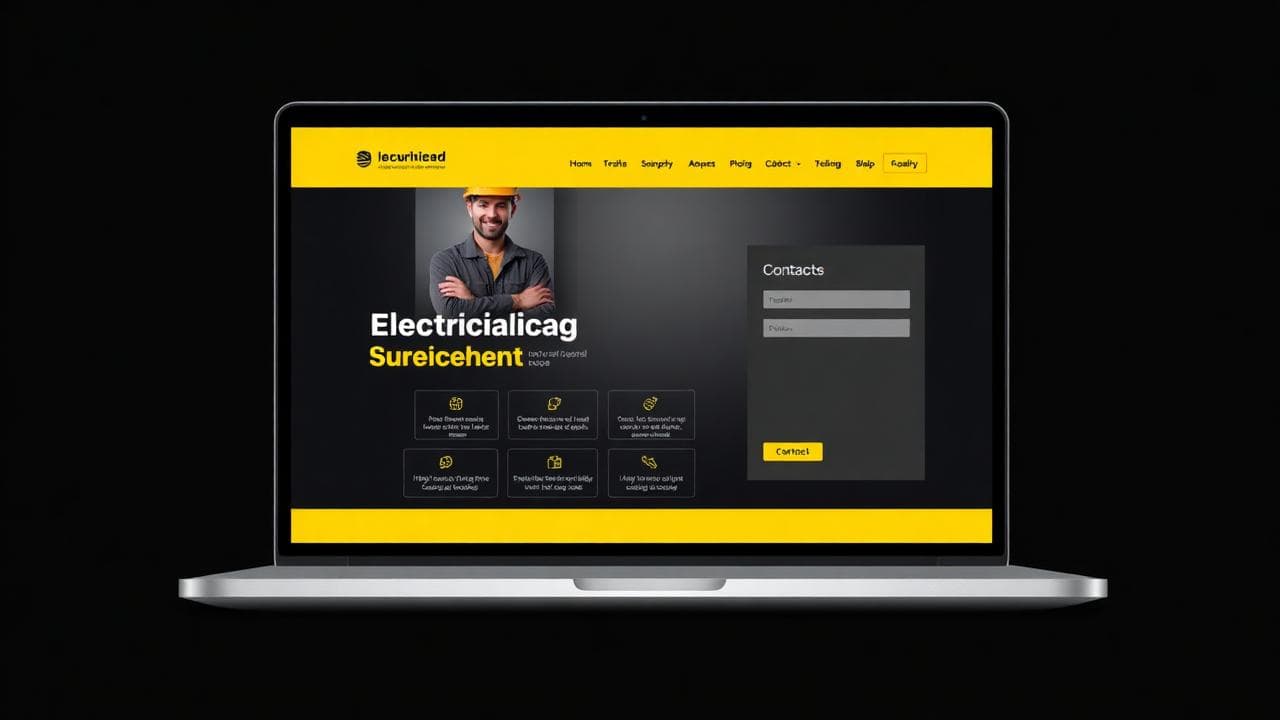
- Pro: $1,500–$4,000 all-in — dramatically lower upfront cost.
- Pro: faster to launch — typically 1–3 weeks versus 6–10 weeks for custom.
- Pro: proven layouts that work for service businesses.
- Con: limited differentiation — your competitor can buy the same template.
- Con: limited SEO control — some template platforms restrict title tag, schema, and technical SEO options.
- Con: performance varies — some templates are bloated with slow page speeds.
- Con: harder to build service-area and city-specific pages at scale.
Custom Websites for Electricians — Pros and Cons
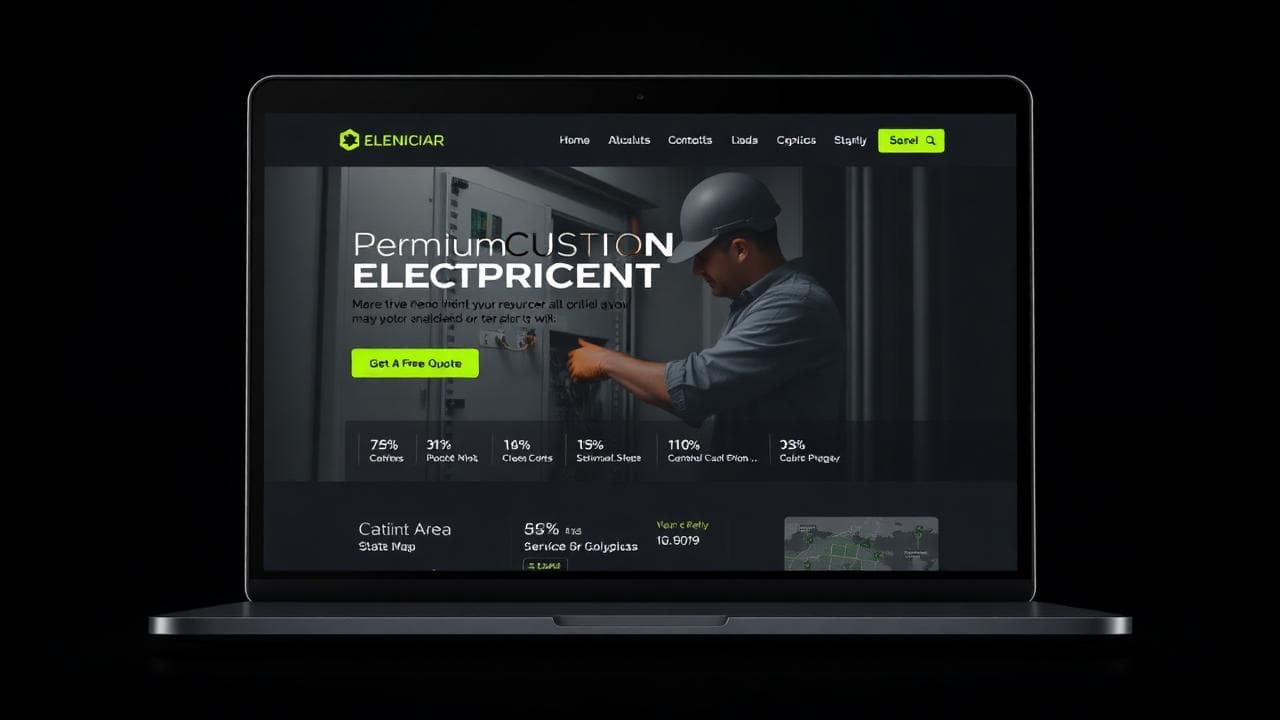
- Pro: full SEO control — custom schema, optimal Core Web Vitals, unlimited city/service pages.
- Pro: unique design — brand differentiation in competitive markets.
- Pro: scalable architecture — add service areas, services, and content without platform constraints.
- Con: $8,000–$20,000+ upfront investment.
- Con: 6–12 weeks to launch.
- Con: requires ongoing developer relationship for maintenance and updates.
The 5 Features Every Electrician Website Must Have
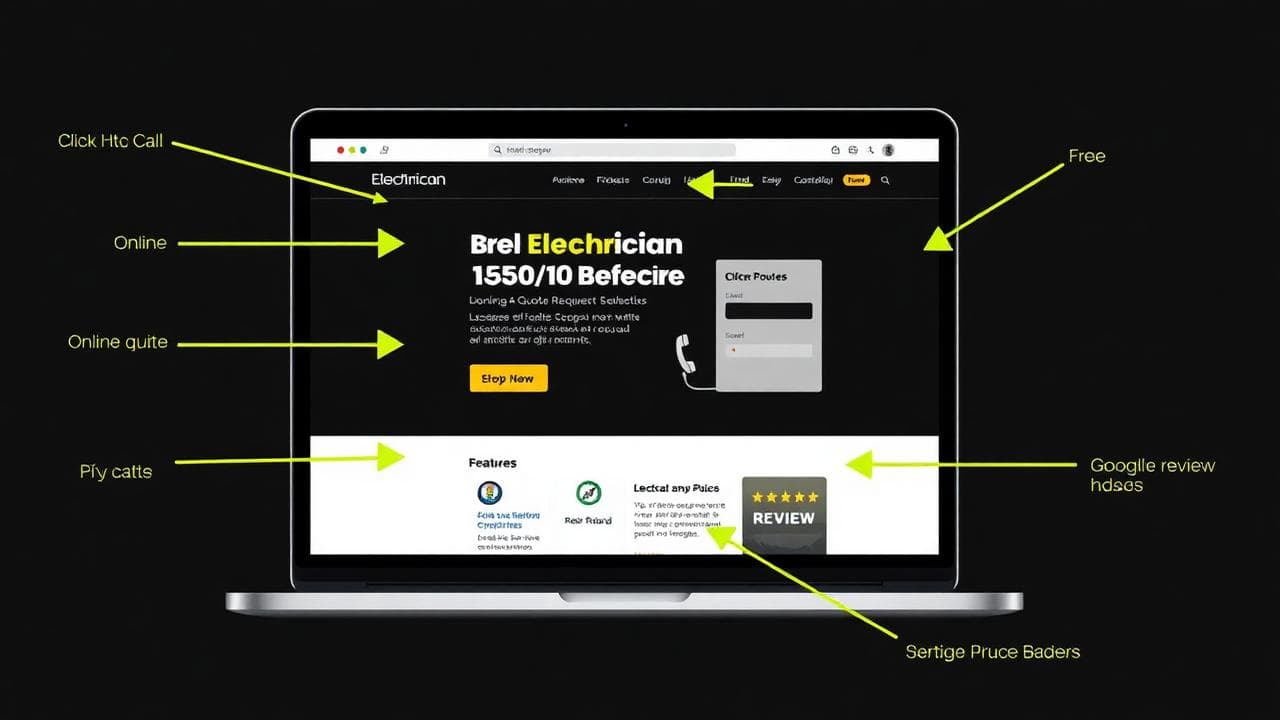
- Click-to-call phone number: sticky in the header on mobile, tappable as a tel: link, displayed prominently above the fold on desktop.
- Service request form: simple — name, phone, service type, preferred time. No more than 5 fields.
- Service area page: list every city and neighborhood you serve with dedicated content, or at minimum a service area map embed.
- Reviews and credentials: Google review widget or embedded reviews, license number displayed, any certifications (Master Electrician, EICR certified, etc.).
- Fast load time: under 2 seconds on mobile — urgency-driven trades lose visitors instantly to slow sites.
SEO for Electrician Websites
Electrician website SEO focuses on local: service + city landing pages ("electrician [city]," "EV charger installation [city]," "electrical panel upgrade [city]"), LocalBusiness + Electrician schema markup, and Core Web Vitals compliance. The majority of organic electrician traffic comes from Google Maps (local pack) rather than traditional organic results — which means GBP optimization is often more valuable than website SEO for solo contractors.
When to Choose a Template vs Custom for Your Electrical Business
- Choose a template if: you are a solo electrician or small team, you are in a low-to-medium competition market, you need to launch quickly and within budget, and you have a strong GBP profile with good reviews.
- Choose custom if: you are a multi-location electrical contractor, you are competing in a large metro with multiple well-funded competitors, you need a large number of city and service-specific landing pages, or you want maximum performance and SEO control.
Recommended Platforms for Electrician Websites
- Squarespace or Wix: easiest to manage, acceptable for low-competition markets. Limited SEO control.
- WordPress with Elementor and a trade-specific theme: best balance of cost, flexibility, and SEO capability for most electricians.
- Next.js custom build: best performance and SEO outcomes, highest cost and development dependency.
- Contractor-specific platforms (Jobber Websites, Housecall Pro sites): functional, quick to set up, but limited on SEO and design differentiation.
Want help with your electrician website?
We build call-optimized electrician websites on the right platform for your market and budget.
Get a free audit
Dream Code Labs
Web Development & Automation Agency · 7+ years experience
Dream Code Labs is a remote-first development and automation agency specialising in custom websites, AI-powered tools, and workflow automation for marketing agencies and growing SMEs across the UK, US, Canada, and Australia. We have delivered 50+ projects that produce measurable, real-world results.
Frequently Asked Questions
How much does an electrician website cost?
A template-based electrician website costs $1,500–$4,000 all-in for design and setup. A semi-custom WordPress site costs $4,000–$8,000. A fully custom build with maximum SEO and performance capability costs $10,000–$20,000. Most solo electricians and small electrical contractors get excellent results from a well-configured template or semi-custom WordPress site.
What should be on an electrician website?
An electrician website must have: a prominent click-to-call phone number (tappable on mobile), a service request form, a list of services with separate pages for each, service area coverage, Google reviews and license credentials, and fast mobile load times. Optional but valuable: before/after project photos, an EV charger or electrical panel upgrade landing page targeting high-value searches.
How do I get my electrician business to rank on Google?
Most electrician Google rankings come from the local map pack. Optimize your Google Business Profile first: complete every field, add photos, generate consistent reviews. Then publish service + city landing pages on your website (e.g., "electrician [city]," "panel upgrade [city]") and add LocalBusiness schema markup. For competitive markets, citation building and a technical SEO audit accelerate results.
Do electricians need a website or is Google Business Profile enough?
Your Google Business Profile drives most calls directly, but a website is still necessary: it provides the landing page GBP visitors click to before calling, gives you a place for service-specific content that helps you rank for more keywords, and provides a credibility check — many customers visit the website to confirm you are real and professional before calling.
What is the best website builder for electricians?
For most electricians, WordPress with a trade-specific theme and Elementor page builder offers the best balance of cost, SEO capability, and ease of management. For very small budgets or immediate needs, Wix or Squarespace work but offer less SEO control. For highly competitive markets where ranking is the priority, a custom Next.js build consistently outperforms template platforms on Core Web Vitals and technical SEO.
Last updated: 02 Jun 2026