Blogs
Dentist SEO — Complete 2026 Guide to Ranking Your Dental Practice

Key Takeaways
- Google Business Profile is the #1 ranking factor for dentists in local search — optimize it first.
- Patient reviews on Google are both a ranking signal and the primary trust signal for new patients.
- Each dental service (Invisalign, implants, whitening, emergency dentistry) needs its own landing page.
- HIPAA compliance applies to any web form collecting patient health information.
- Core Web Vitals scores directly influence your local pack ranking in competitive markets.
Why Dentist SEO Has Such High ROI
A single new patient is worth $1,000–$10,000 in lifetime value depending on the treatments they accept. Ranking #1 in the local pack for "dentist near me" in a mid-size city can deliver 50–150 new patient inquiries per month. At even a 20% conversion rate, that is 10–30 new patients — potentially $50,000–$300,000 in annual lifetime value from one keyword. No other marketing channel for dental practices delivers this kind of return at scale.
Local pack reality
63% of dental patients choose one of the top 3 results in the Google local pack. If your practice is not in the top 3, the majority of potential new patients in your area never see you.
Step 1: Google Business Profile Optimization for Dentists
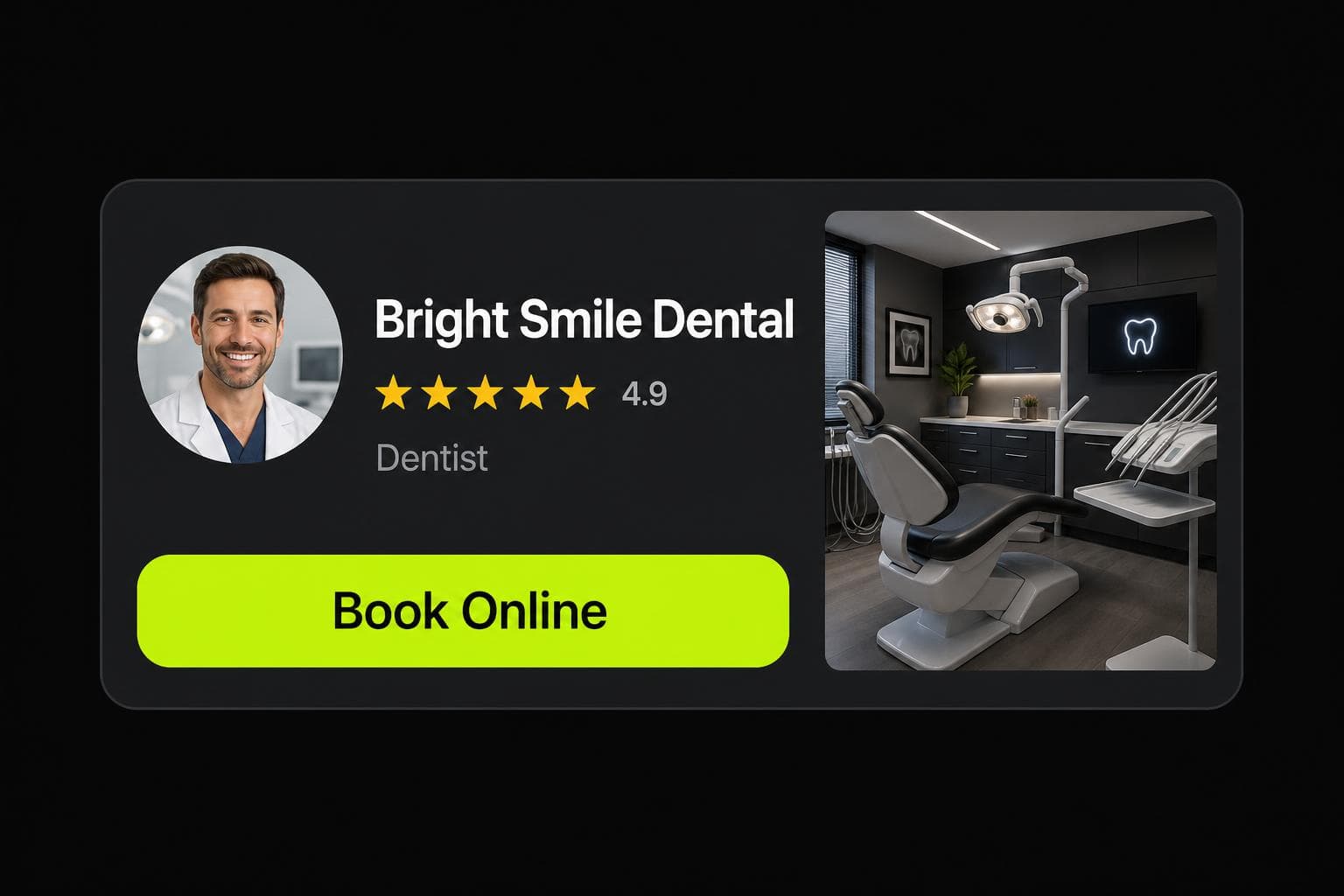
- Primary category: "Dentist." Add secondary categories for specialties: Orthodontist, Cosmetic Dentist, Oral Surgeon, Pediatric Dentist.
- Business description: 750 characters, mention your city, top 3 services, and a unique differentiator.
- Photos: minimum 20 photos — exterior, interior, treatment rooms, staff, before/after (with consent). Update monthly.
- Services: list every service with a description and price range where possible.
- Q&A: seed with your most common patient questions and answer them.
- Posts: publish at minimum twice per month — promotions, patient spotlights, new equipment.
- Booking link: connect to your scheduling system (Dentrix, Eaglesoft, or your practice management software).
Step 2: Getting and Managing Google Reviews
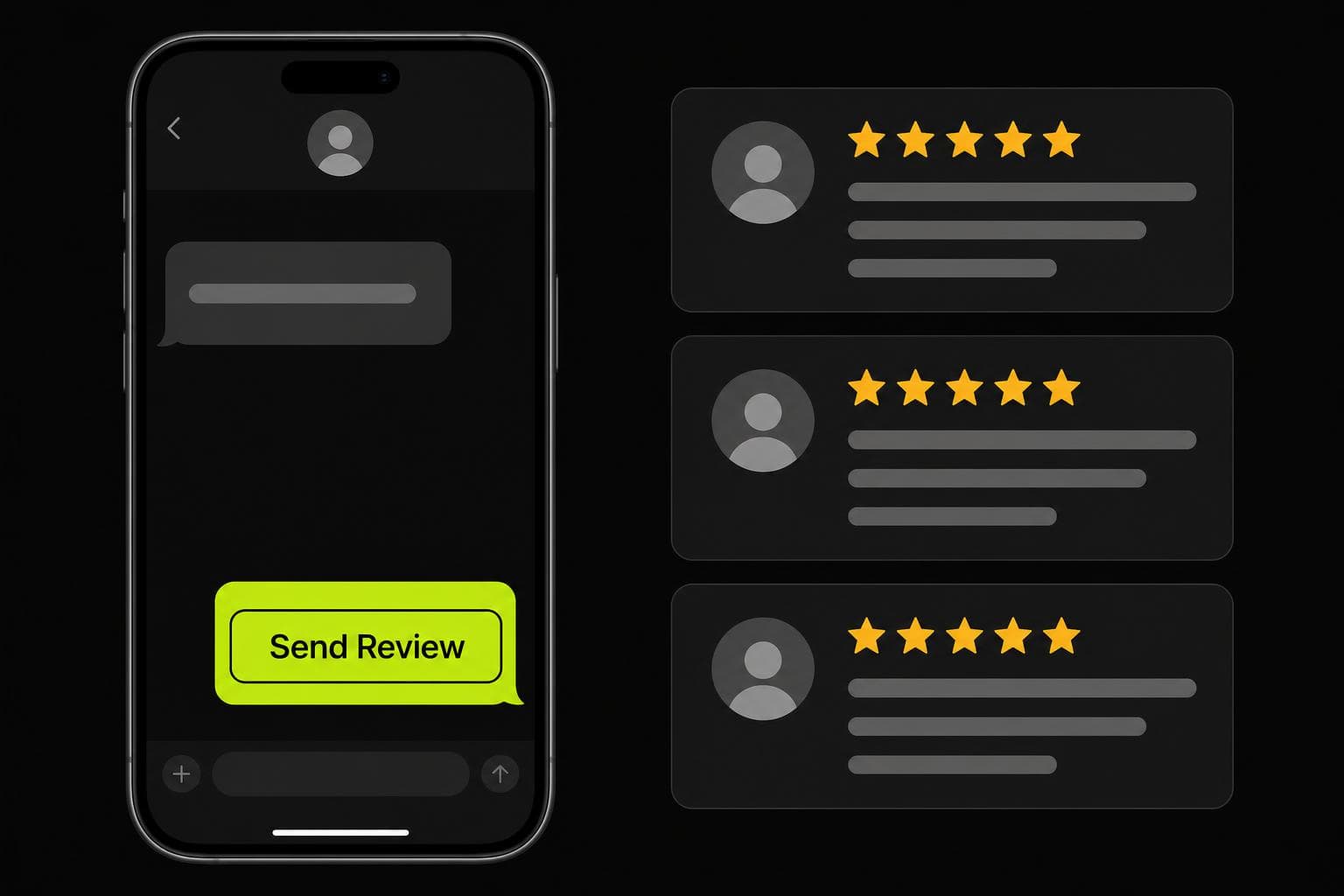
Reviews are both a ranking signal and a conversion signal. Practices with 100+ reviews at 4.7+ stars rank significantly higher and convert significantly better than those with 20 reviews at 4.2 stars. The most effective review acquisition strategy: send a text message with the Google review link within 2 hours of the appointment ending. Response rate from this method is 20–40% versus under 5% for email-based requests.
- Respond to every review — positive and negative — within 24 hours.
- Never offer incentives for reviews (against Google policy and FTC guidelines).
- Use a HIPAA-compliant SMS platform for review requests — do not include any PHI in the message.
- Aim for 5+ new reviews per month minimum; 15–20/month in competitive markets.
Step 3: Service-Specific Landing Pages
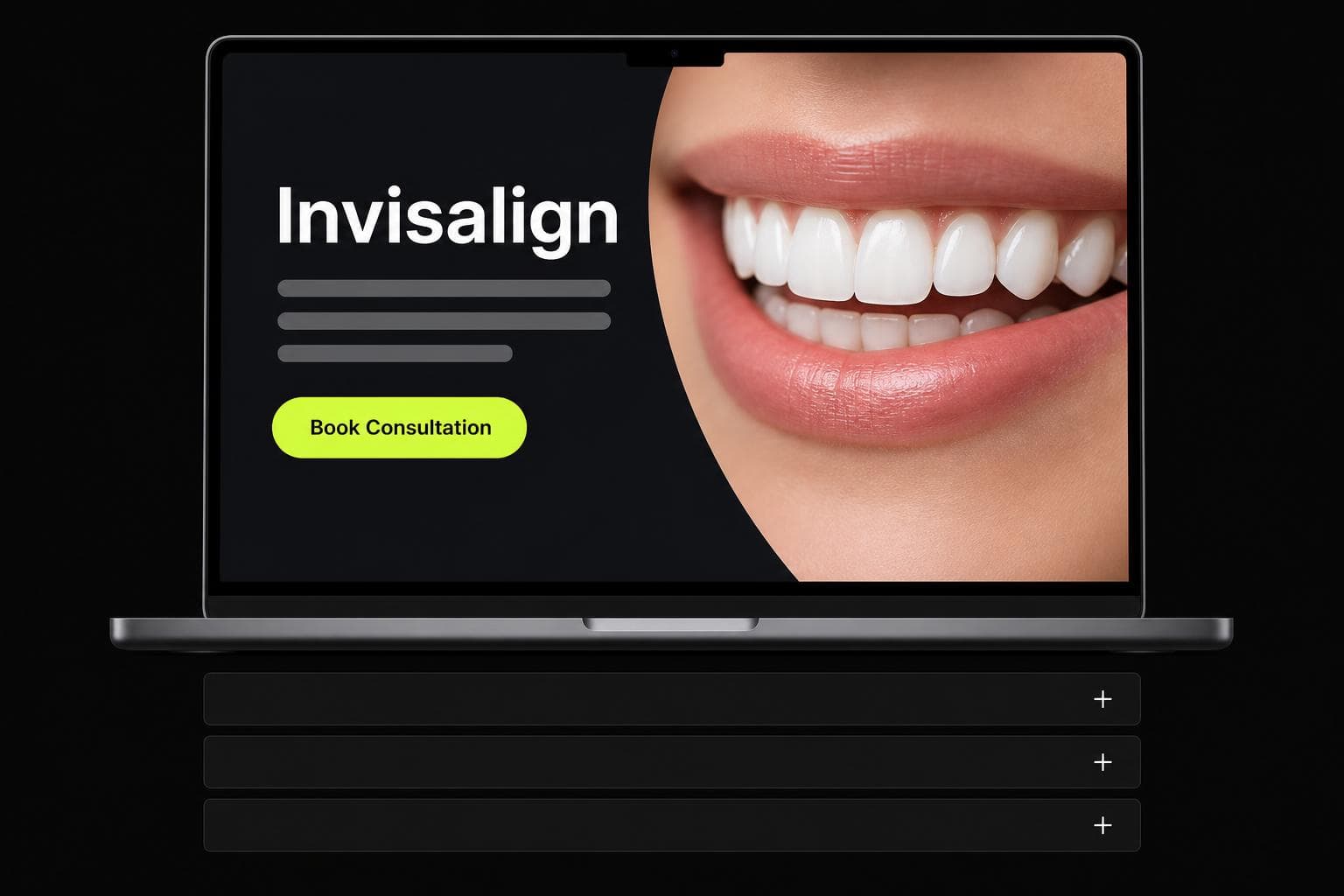
Generic "Services" pages do not rank for specific treatment searches. A patient searching "Invisalign dentist [city]" needs to land on a page dedicated to Invisalign — with the keyword in the H1, meta title, and URL, plus content that answers their specific questions. Build individual pages for: dental implants, Invisalign/clear aligners, teeth whitening, emergency dentistry, dental veneers, pediatric dentistry, dental cleanings, root canal treatment, tooth extraction.
Step 4: Technical SEO for Dental Websites
- Schema markup: LocalBusiness + Dentist schema with NAP, hours, accepted insurance, and aggregate review rating.
- Core Web Vitals: LCP under 2.5 seconds, CLS under 0.1, INP under 200ms — these affect local pack rankings.
- Mobile-first: click-to-call in header, tap-friendly booking buttons, no intrusive interstitials.
- HTTPS and secure forms: required for any page collecting patient information.
- Sitemap: submit to Google Search Console and ensure all service pages are included.
Step 5: Content Marketing for Dental Practices
Publishing 2–4 blog posts per month on topics patients actually search — "how long does Invisalign take," "what to eat after a tooth extraction," "signs you need a root canal" — builds topical authority and drives organic traffic from patients in the research phase. These visitors convert to new patients at a lower rate than "dentist near me" searchers, but they arrive already educated and often become high-value patients.
Step 6: HIPAA-Safe Web Practices for Dentists
Any online form that collects patient health information must comply with HIPAA. This includes intake forms, insurance verification forms, and even appointment request forms that ask about the reason for the visit. Use a dental-specific platform (Weave, Swell, NexHealth, or your practice management system's patient portal) rather than generic form builders. Ensure your web host has a BAA and that analytics tools do not inadvertently capture PHI through URL parameters or form field tracking.
Step 7: Link Building for Dental SEO
- List your practice on every major dental directory: Zocdoc, Healthgrades, WebMD, US News, Yelp, Vitals.
- Ensure NAP is identical across every directory.
- Sponsor local events, school health fairs, or sports teams for local citation links.
- Contribute a dental column to a local newspaper or neighborhood blog.
- Reach out to local mommy blogs for Pediatric dentistry mentions.
Want help with your dental practice SEO?
We build technical SEO foundations and content strategies that put dental practices in the local map pack.
Get a free audit
Dream Code Labs
Web Development & Automation Agency · 7+ years experience
Dream Code Labs is a remote-first development and automation agency specialising in custom websites, AI-powered tools, and workflow automation for marketing agencies and growing SMEs across the UK, US, Canada, and Australia. We have delivered 50+ projects that produce measurable, real-world results.
Frequently Asked Questions
How long does dentist SEO take to show results?
Google Business Profile optimization often shows local pack ranking improvements within 4–8 weeks. Organic keyword rankings from new service pages typically take 3–6 months. Competitive markets (large cities, multiple DSO competitors) can take 9–12 months of consistent effort before reaching the top 3 local pack positions.
How much does dental SEO cost per month?
Dental SEO retainers range from $1,000–$2,000/month for a solo practice in a low-competition market to $4,000–$8,000/month for a DSO or multi-location practice in a competitive city. The investment pays back quickly: a single new implant patient ($3,000–$5,000 treatment value) often covers a full month's retainer.
What is the most important SEO factor for dentists?
Google Business Profile optimization is the single most important factor for most dental practices because the local map pack drives the majority of new-patient searches. Within GBP, the three most influential signals are: review quantity and recency, NAP consistency, and category selection. After GBP, on-site technical health and service-specific landing pages matter most.
Do dental websites need to be HIPAA compliant?
Any dental website feature that collects protected health information must be HIPAA compliant. This includes appointment request forms that ask for symptoms or insurance, patient intake forms, and any messaging system. Use platforms that offer a Business Associate Agreement and encrypt data at rest and in transit.
How do I get my dental practice to rank #1 on Google?
Rank #1 in the local pack by: fully optimizing your Google Business Profile with complete information, photos, and regular posts; generating a consistent flow of 5-star Google reviews; publishing service-specific landing pages with local keywords; building citations in dental directories; and ensuring your site passes Core Web Vitals. For the local pack, GBP signals and review signals are the dominant factors.
Is SEO worth it for dentists?
Yes — dentist SEO has among the highest ROI of any dental marketing channel. A single new implant or full-arch reconstruction patient worth $5,000–$25,000 can fund months of SEO investment. Unlike paid ads that stop the moment you stop paying, SEO compounds over time: rankings and content built today continue to generate new patients for years.
Last updated: 02 Jun 2026