Blogs

Shopify SEO Services — What's Included, What to Avoid, and What Actually Ranks (2026)

Key Takeaways
- Shopify's built-in SEO features are a starting point, not a complete strategy — technical issues like duplicate content and slow themes require active management.
- Collection page optimization is the highest-leverage Shopify SEO activity for most stores.
- Shopify's URL structure and canonical tag defaults create duplicate content issues that must be fixed.
- Product page SEO requires unique descriptions — not manufacturer copy — to compete in organic search.
- Backlinks to e-commerce stores must be earned through linkable assets like data studies, tools, or editorial content.
Why Shopify SEO Is Different From Other Platform SEO
Shopify is built for e-commerce conversion, not SEO. The platform generates canonical tags, sitemaps, and basic meta tag fields — but it also creates structural SEO problems that require active management: duplicate product URLs from collection paths, inability to edit robots.txt directly, pagination issues, and slow theme performance from unoptimized apps. A Shopify SEO service must address these platform-specific issues before any content or link work will be fully effective.
The Shopify duplicate content problem
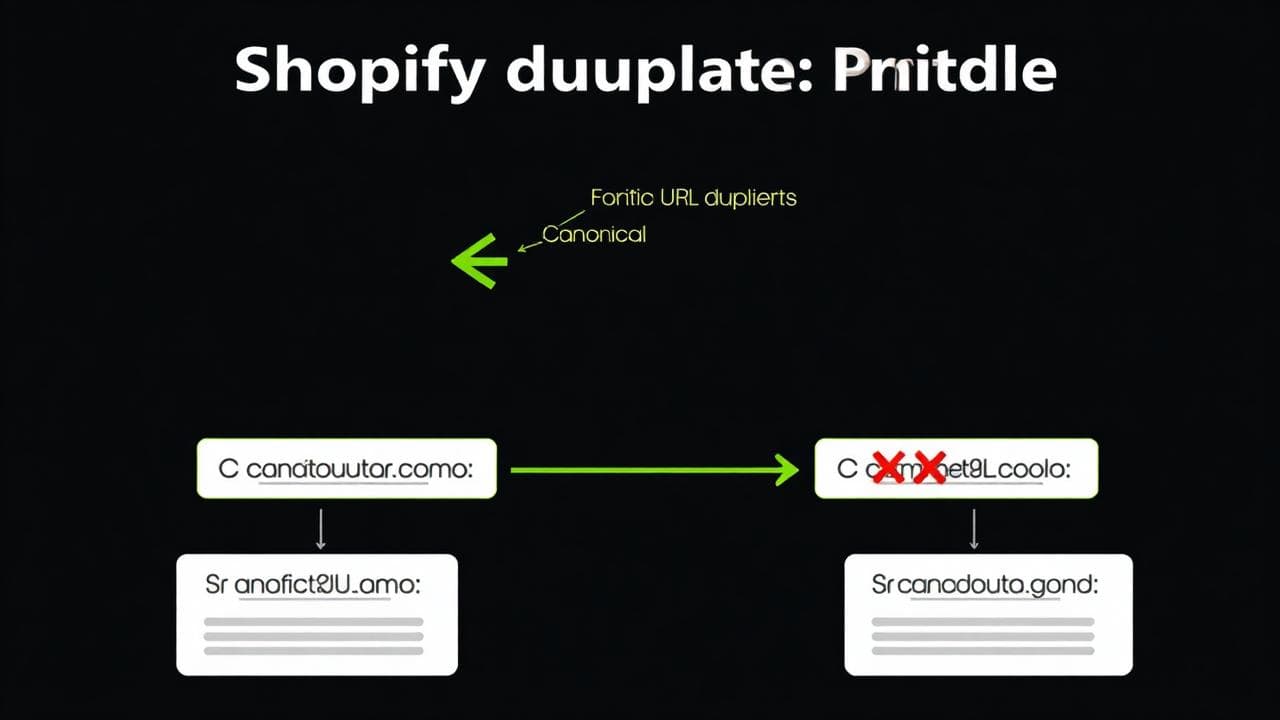
Every Shopify product exists at multiple URLs: /products/product-name and /collections/collection-name/products/product-name. Without proper canonical tag management, Google may split ranking signals between these duplicate URLs. Most Shopify themes handle this correctly, but verify yours does.
Technical SEO for Shopify Stores
- Core Web Vitals: Shopify themes with heavy app loads frequently fail LCP and CLS thresholds. Audit your theme's performance and remove or replace slow apps.
- Canonical tags: ensure products canonicalize to /products/ URLs, not collection-path variants.
- Sitemap: Shopify auto-generates sitemap.xml — submit it to Search Console and verify all important pages are included.
- Robots.txt: Shopify 2.0 allows limited robots.txt editing; ensure you are not blocking important pages.
- Internal linking: collection pages should link to related collections and key product pages.
- Structured data: Product, BreadcrumbList, and Organization schema should be present on all key page types.
Collection Page Optimization — The Highest-Leverage Activity
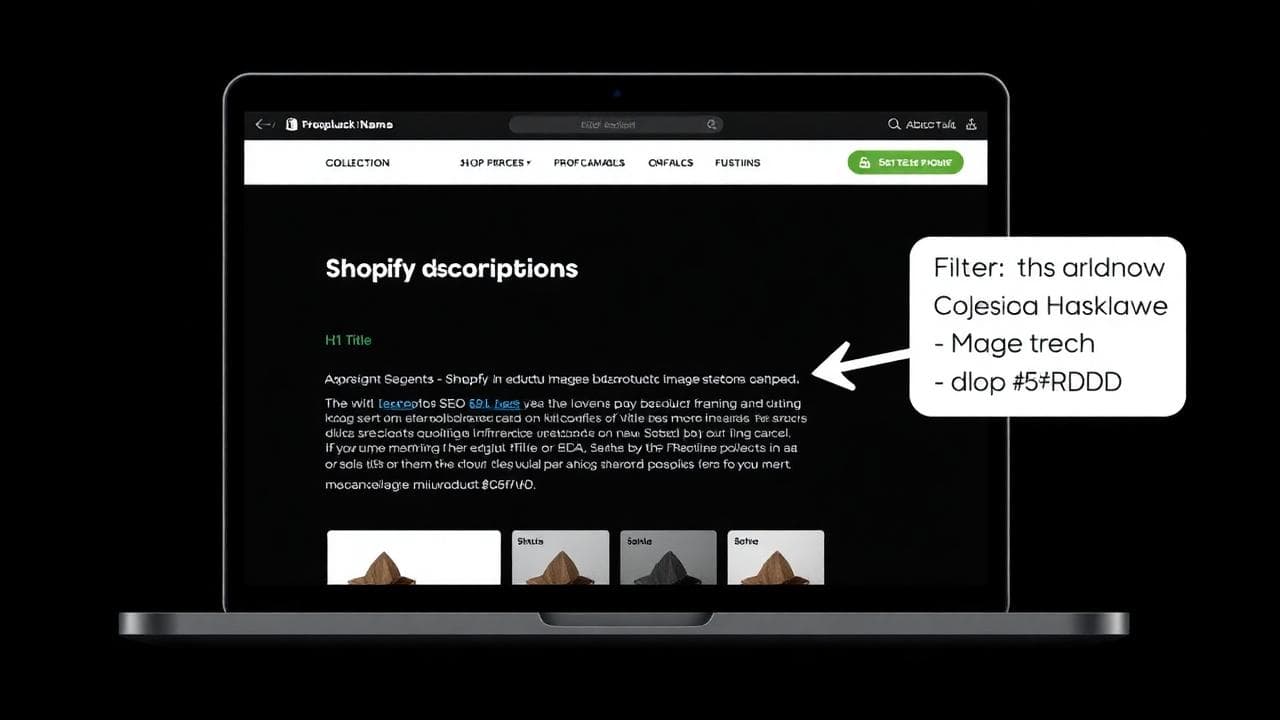
Collection pages (category pages in Shopify terminology) are where the majority of organic e-commerce traffic lands. A shopper searching "women's running shoes" expects to land on a page showing multiple products — a collection page, not a single product page. Optimizing collection pages means: keyword-focused title tags and H1s, unique descriptive text above and below the product grid, breadcrumb schema, faceted navigation with canonical tags, and pagination handled via rel="next"/"prev" or infinite scroll with proper implementation.
Product Page SEO That Actually Ranks
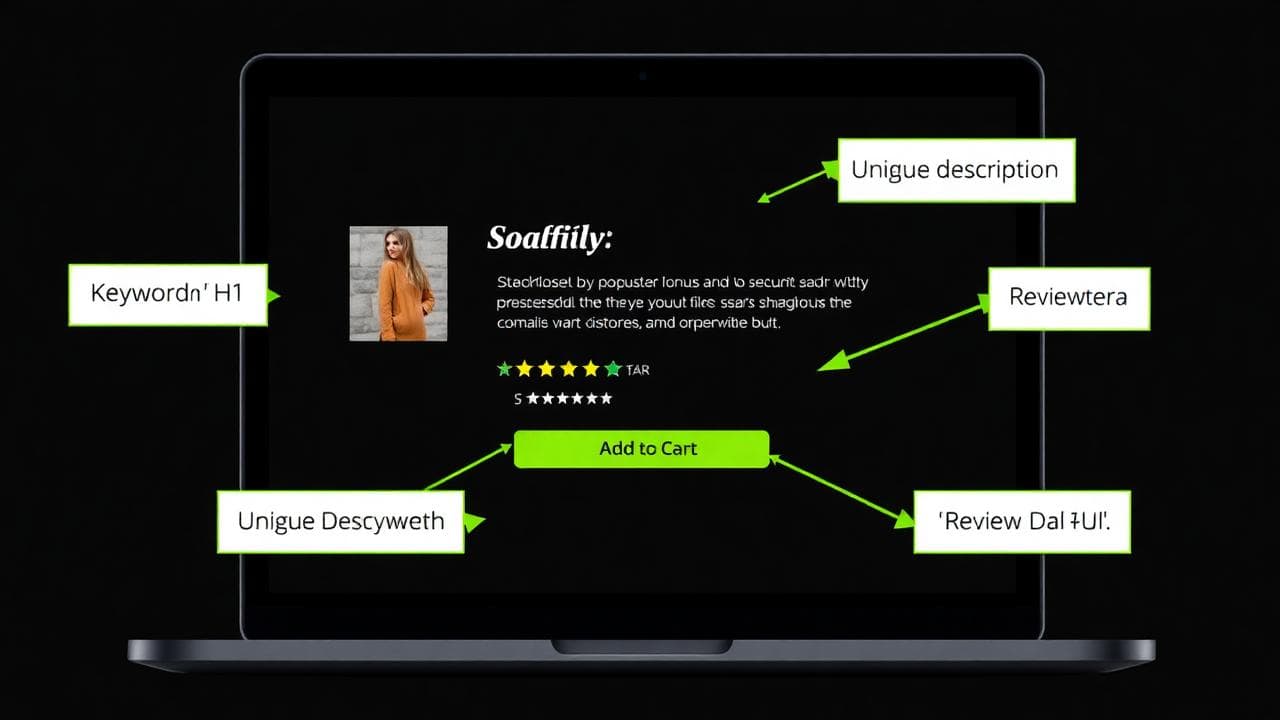
- Unique product descriptions: manufacturer copy creates duplicate content across thousands of competing stores. Write unique descriptions that address customer questions, highlight differentiators, and include the primary keyword naturally.
- Product schema: include price, availability, aggregate rating, and review count.
- Image optimization: descriptive ALT text, compressed file sizes, next-gen formats (WebP/AVIF).
- User-generated content: reviews from a platform like Yotpo or Okendo add unique, keyword-rich content to product pages.
- FAQs: an expandable FAQ section on high-value product pages earns FAQ rich snippets and answers long-tail queries.
Content Marketing for Shopify SEO
Shopify's built-in blog supports content marketing that drives informational traffic — buyers in the research phase. A fishing tackle store ranking for "best bass lures for summer" attracts buyers before they know which product to choose. Blog content also earns backlinks that boost the domain authority benefiting all collection and product pages. Aim for 2–4 buying guides or comparison posts per month targeting buyer-intent informational queries.
Link Building for Shopify E-commerce Stores
- Digital PR: data-driven studies or industry reports that journalists link to.
- Product seeding: send products to niche bloggers and YouTubers in exchange for honest reviews with links.
- Supplier and brand pages: if you are an authorized retailer, request a link from the brand's "Where to Buy" page.
- Resource pages: reach out to industry resource pages that link to relevant products or guides.
- Skyscraper content: create the most comprehensive buying guide in your niche and outreach to sites linking to inferior versions.
What a Legitimate Shopify SEO Retainer Includes
- Monthly technical audit and fix implementation.
- Collection page optimization (title tags, meta descriptions, on-page content).
- Product page schema and meta tag optimization.
- Blog content production (2–4 posts per month).
- Link building (outreach, digital PR, or both).
- Monthly reporting: organic traffic, ranking positions, revenue attribution from organic.
Shopify SEO Red Flags to Avoid
- Agencies that promise results without auditing your specific Shopify setup.
- Link building via private blog networks (PBNs) — Google penalizes these.
- Auto-generated product descriptions via AI with no human review or uniqueness check.
- Keyword stuffing in meta titles and descriptions.
- Ignoring Core Web Vitals while focusing only on content.
What Shopify SEO Services Cost
- Small Shopify store (under 500 SKUs, low competition): $1,500–$3,000/month.
- Mid-size store (500–5,000 SKUs, competitive category): $3,000–$6,000/month.
- Large or enterprise Shopify Plus store: $6,000–$15,000/month.
- One-time technical SEO audit: $1,000–$3,000.
Want help with your Shopify store SEO?
We build technical and content SEO strategies for Shopify stores that drive measurable organic revenue growth.
Get a free audit
Dream Code Labs
Web Development & Automation Agency · 7+ years experience
Dream Code Labs is a remote-first development and automation agency specialising in custom websites, AI-powered tools, and workflow automation for marketing agencies and growing SMEs across the UK, US, Canada, and Australia. We have delivered 50+ projects that produce measurable, real-world results.
Frequently Asked Questions
Is Shopify good for SEO?
Shopify is adequate for SEO out of the box — it generates sitemaps, canonical tags, and meta tag fields automatically. However, it creates platform-specific challenges (duplicate URLs, theme performance issues, limited robots.txt control) that require active management. With proper SEO work, Shopify stores can rank highly in competitive e-commerce categories.
How much does Shopify SEO cost?
Shopify SEO retainers range from $1,500/month for a small store in a low-competition category to $15,000/month for a large Shopify Plus store competing in a high-volume category. The investment should be evaluated against organic revenue generated — most well-executed Shopify SEO campaigns produce 3–10x return on retainer cost within 12 months.
How long does Shopify SEO take to work?
Technical fixes and existing page optimizations can show ranking improvements within 4–8 weeks. New content pages typically take 3–6 months to rank. Significant domain authority improvements from link building take 6–12 months to compound into measurable traffic gains. Most Shopify stores see meaningful organic traffic growth within 6 months of a comprehensive SEO strategy.
What is the most important SEO factor for Shopify stores?
Collection page optimization is typically the highest-leverage factor for Shopify stores because collection pages target the high-volume category keywords where most organic e-commerce traffic originates. After collection pages, site speed (Core Web Vitals) and unique product descriptions are the next most impactful factors.
Does Shopify have duplicate content issues?
Yes — Shopify creates product pages at multiple URLs (the standard /products/ URL and collection-path variants like /collections/collection-name/products/product-name). Most modern Shopify themes handle canonical tags correctly to point to the primary URL, but this should be verified. Shopify also creates duplicate pagination pages that need canonical management.
Can I do Shopify SEO myself?
You can handle foundational Shopify SEO yourself: installing a well-rated SEO app, writing unique product descriptions, optimizing title tags and meta descriptions, and publishing blog content. Technical issues (theme performance, schema markup, international SEO) and link building at scale are significantly harder without specialist knowledge and typically benefit from professional help.
Last updated: 02 Jun 2026