Blogs

HVAC Marketing Playbook — 10 Strategies to Book More Heating & Cooling Jobs in 2026

Key Takeaways
- HVAC is an urgency-driven category — most customers make a decision within hours of searching. Showing up in the local pack is critical.
- Google Local Services Ads (LSAs) are the highest-ROI paid channel for most HVAC businesses.
- Seasonal content and targeted campaigns (pre-summer AC, pre-winter heating) compound organic traffic over time.
- Online reviews are the primary trust signal for HVAC decisions — more than price for many customers.
- Service agreement and maintenance plan customers are your most valuable long-term assets — market to them separately.
Why HVAC Marketing Is Urgency-Driven
A homeowner whose AC stops working in July does not comparison shop for three weeks. They search "AC repair near me," scan the top 3 map pack results, check reviews, and call within minutes. This urgency dynamic means HVAC marketing is almost entirely about showing up — in the right place, at the right moment, with enough trust signals to get the call. The business that wins the local pack in their market books 5–10x more jobs than one ranking 6th organically.
HVAC urgency stat
68% of HVAC customers contact the first business they find that has strong reviews and a visible phone number. Being #1 with 50 reviews beats being #3 with 200 reviews for most urgent searches.
Strategy 1: Google Business Profile Domination
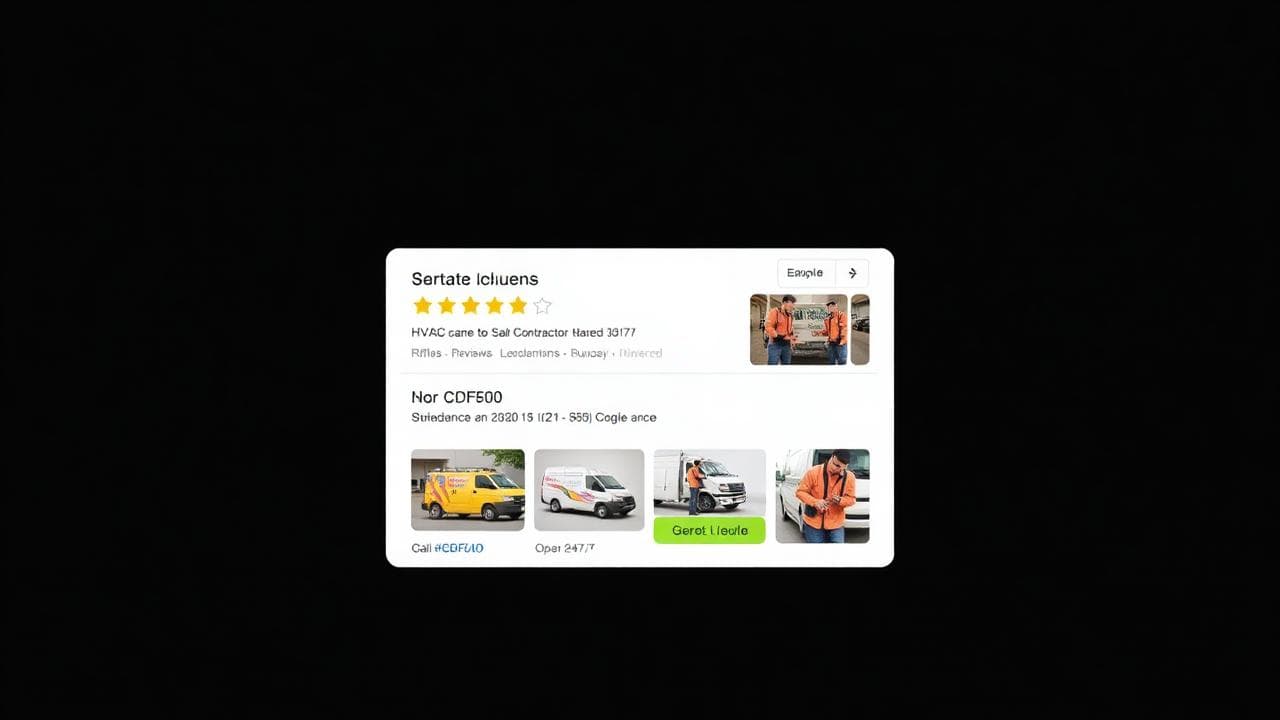
- Primary category: "HVAC Contractor." Add secondary: "Air Conditioning Contractor," "Heating Contractor," "Furnace Repair Service."
- Service area: set your complete service area including all cities and suburbs you serve.
- Photos: trucks, technicians on-site, before/after of HVAC systems, your office.
- Services: list every service — AC repair, furnace installation, heat pump, duct cleaning, service agreements.
- Booking link: connect to your scheduling system.
- Posts: publish seasonally — pre-summer AC tune-up promotions, pre-winter furnace check deals.
Strategy 2: Google Local Services Ads
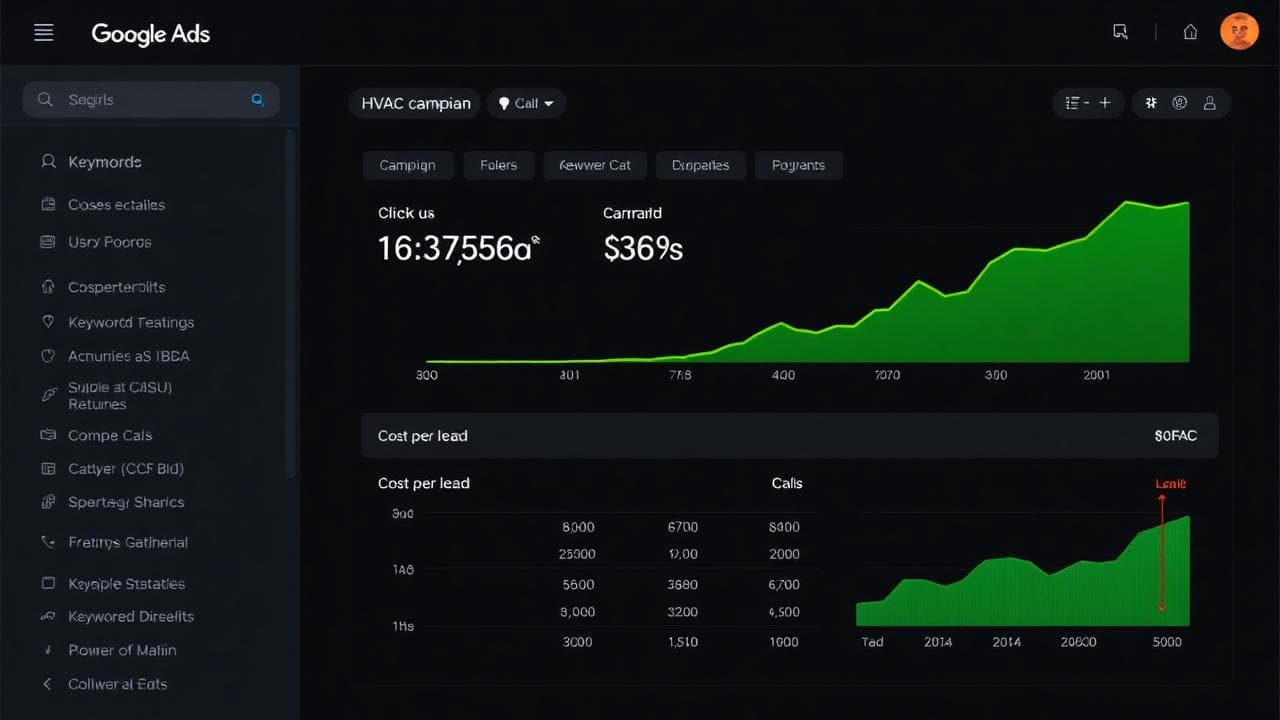
LSAs appear above standard Google Ads with the "Google Guaranteed" badge and a phone number. You pay per lead, not per click. HVAC is one of the highest-performing LSA categories: the urgency of the purchase means conversion rates from LSA leads are significantly higher than standard PPC. Budget $1,500–$5,000/month for LSAs depending on your market size and how aggressively you want to grow.
Strategy 3: Service-Specific Landing Pages
Build individual pages for every HVAC service in every city you serve: "AC repair [city]," "furnace installation [city]," "heat pump replacement [city]." Each page needs the service and city in the H1 and meta title, unique content addressing local climate and common equipment brands, local phone number, and a prominent "Book Service" CTA. These pages compound organic rankings over time and convert at higher rates than generic service pages.
Strategy 4: Seasonal Content Marketing
- Pre-summer (March–May): "How to prepare your AC for summer," "Signs your AC needs service before summer heat."
- Summer (June–August): "Why is my AC not cooling the house," "AC repair vs replacement — which is right for you."
- Pre-winter (September–October): "Furnace tune-up checklist," "Signs your furnace needs replacement before winter."
- Winter (November–February): "Why is my furnace not heating," "Heat pump vs furnace — which is better in [climate]."
Strategy 5: Review Generation System
Send a review request text within 2 hours of job completion — when the customer's satisfaction is highest. Include a direct Google review link. Target 10–20 new reviews per month. Respond to every review. HVAC businesses with 200+ reviews at 4.7+ consistently dominate local packs in competitive markets because Google interprets review volume and recency as evidence of business activity and customer satisfaction.
Strategy 6: Service Agreement Marketing
Service agreement customers (annual maintenance plans) are worth 3–5x more over their lifetime than one-time service customers. They provide predictable revenue, generate more reviews, and refer more frequently. Market service agreements actively: include a pitch at the end of every service call, email your customer list seasonally, and run a dedicated landing page for maintenance plan sign-ups with clear pricing and benefits.
Strategy 7: Email Marketing to Your Customer Database
- Pre-season tune-up reminders sent 6 weeks before peak cooling and heating seasons.
- Manufacturer rebate announcements when available on new equipment.
- New service announcements (indoor air quality, duct sealing, EV charger installation).
- Referral program reminders — offer $50 off for every referred customer who books.
- Annual "system age check" — email customers whose system is 8+ years old about replacement options.
Strategy 8: Referral and Contractor Partnership Programs
Plumbers, electricians, and general contractors regularly encounter homeowners with HVAC needs. Build formal referral relationships with these trades — a $100–$200 referral fee for each job that books generates significant volume without any marketing spend. Real estate agents referring clients to your pre-purchase inspection service is another high-quality referral source.
Strategy 9: Nextdoor and Community Group Marketing
Nextdoor and local Facebook groups are where homeowners ask for contractor recommendations. Claim your Nextdoor Business Page and actively participate. When neighbors ask for HVAC recommendations, your reviews and visibility drive recommendations. Sponsoring a neighborhood group or running a Nextdoor ad campaign can be highly cost-effective in residential markets.
Strategy 10: Vehicle and Yard Sign Branding
Wrapped service vehicles and yard signs in neighborhoods where you work are still among the most cost-effective HVAC marketing tools available. A wrapped truck driving through a neighborhood in July plants brand recognition that activates when the neighbor's AC fails next week. Always include your website and phone number in a format that is readable at 40 mph.
Want help with your HVAC marketing?
We build local SEO strategies and lead generation systems specifically for HVAC contractors.
Get a free audit
Dream Code Labs
Web Development & Automation Agency · 7+ years experience
Dream Code Labs is a remote-first development and automation agency specialising in custom websites, AI-powered tools, and workflow automation for marketing agencies and growing SMEs across the UK, US, Canada, and Australia. We have delivered 50+ projects that produce measurable, real-world results.
Frequently Asked Questions
How do HVAC companies get more customers?
HVAC companies get more customers through: Google local pack ranking (via GBP optimization and reviews), Google Local Services Ads, service-specific landing pages targeting city + service keywords, seasonal email marketing to existing customers, and referral programs with other trades. The highest-ROI channel varies by market — most successful HVAC companies run local SEO and LSAs simultaneously.
How much should an HVAC company spend on marketing?
Most HVAC companies should spend 8–12% of gross revenue on marketing. A company generating $1M in annual revenue should budget $80,000–$120,000/year. That typically breaks down as: $20,000–$40,000 in Google LSAs/PPC, $12,000–$24,000 in SEO, $5,000–$10,000 in email and referral programs, and the remainder on branding and miscellaneous.
What is the best marketing for HVAC companies?
Google Local Services Ads consistently deliver the highest short-term ROI for HVAC because they appear at the very top of results with a Google Guaranteed badge and you pay per lead, not per click. For long-term sustainable growth, local SEO (map pack ranking) is the best investment because it generates consistent free leads. Most top-performing HVAC companies run both.
How do I get my HVAC company to rank in Google?
Rank your HVAC company in Google by: fully optimizing your Google Business Profile with accurate NAP, service area, and regular photo updates; generating 10+ new Google reviews per month; publishing service + city landing pages on your website; and building local citations in contractor directories. For the local map pack, GBP signals and review signals are the dominant ranking factors.
How important are reviews for HVAC businesses?
Reviews are critical for HVAC businesses — they are both a local pack ranking signal and the primary trust signal for customers making urgent decisions. HVAC businesses with 100+ reviews at 4.7+ consistently win more map pack clicks and convert at higher rates than competitors with fewer or lower-rated reviews. A systematic review request process (text within 2 hours of job completion) is the single highest-ROI operational change most HVAC companies can make.
Last updated: 02 Jun 2026